- Chinese Trustworthy Manufacture of Silica Fume
Silica fume is not one product for one job. The grade you need depends on your spec line, your service conditions and how you handle the material. Pick your field on the right — each page gives you the mechanism, the recommended grade, the dosage band and real mix data.
Silica fume — also sold as microsilica or condensed silica fume — is an amorphous SiO₂ powder recovered from silicon and ferrosilicon furnace off-gas. It is used in five main fields:
5–12% of binder; raises 28-day compressive strength 15–25% and cuts permeability.
3–8%; forms mullite in situ above 1,200 °C and extends lining campaigns.
5–10%; lowers rebound and allows thicker single-pass layers.
dosed per API Spec 10A programme; controls fluid loss and gas migration at HPHT.
15–25%; the micro-filler that makes a 120–150 MPa matrix achievable.
Smaller volumes go into grouting, mass concrete, dry-mix repair mortars and insulation compounds. Choosing a grade: densified silica fume (500–700 kg/m³) for silo handling and dry-mix plants; undensified (200–350 kg/m³) where maximum reactivity matters. SiO₂ content, typically 85–98%, sets the pozzolanic ceiling.

Cuts rebound, lifts early cohesion and lets the nozzleman build thicker single-pass layers on tunnel linings and slope stabilisation.
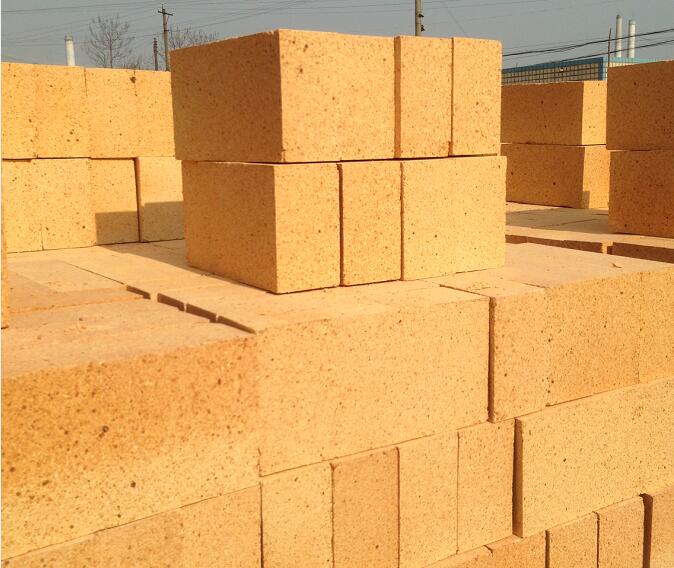
Fills the matrix between coarse grains, forms mullite in situ above 1,200 °C and extends the campaign life of ladles, runners and burner blocks.

Raises early and 28-day strength so piles can be produced without high-pressure steam curing — less coal and power, lower CO₂ per metre.

Controls fluid loss and gas migration under HPHT, prevents strength retrogression above 110 °C and keeps the slurry stable across the placement window.

Works as a heat-stable micro-filler in insulation board and compound formulations, holding shape and low thermal conductivity at service temperature.
Send us your spec line, service temperature and how you handle the material. An engineer comes back within 24 hours with a grade recommendation and a trial quantity.
| Your spec / tender says… | Use grade | Why it works |
|---|---|---|
“C80 concrete, w/c ≤ 0.35” High-strength concretestrength class | Workhorse grade for C60–C100; holds slump with a PCE superplasticiser. Dosage: 8–12% of binder | |
“Rebound < 10%, 100 mm per pass” Shotcrete & tunnellingwet-mix shotcrete | Raises cohesion, so thicker layers bond instead of rebounding. Dosage: 6–10% of binder | |
“Service temperature > 1,500 °C” Refractory & castableshot-face duty | Low carbon and alkali keeps the hot-face matrix clean; zirconium grade for slag lines. Dosage: 3–8% in low-cement castables | |
“f′ck ≥ 120 MPa” UHPCfibre-reinforced | Highest-purity densified grade for UHPC packing density; 94U where dry-mix blending is not used. Dosage: 15–25% of binder | |
“API Spec 10A / ISO 10426 slurry” Oil well & geothermal cementwell cement slurry | Fluid-loss and gas-migration control; resists heat-strength decay in deep and geothermal wells. Dosage: 8–15% BWOC | |
“Steam-free curing, ≥ 80 MPa release” PHC pipe pilespun pile | Early strength to demould without autoclave steam — less coal, less power, lower CO2. Dosage: 5–8% of binder | |
“Composite silicate coating base” Insulation materialcoating base | Cost-efficient grade for the coating base; no need to pay for concrete-grade purity. Dosage: per coating formulation | |
“RCP < 1,000 coulombs, ASTM C1202” Durabilitypermeability limit | Cuts chloride ingress ~10× versus plain OPC, taking RCP under the 1,000-coulomb line. Dosage: 7–10% of binder | |
“XS3 splash-zone exposure class” Marine & coastalmarine exposure | Tighter matrix for chloride-heavy exposure; 95D where dust control matters more. Dosage: 8–12% of binder | |
“Chloride content < 0.1% Cl−” Prestressed / reinforced steelcorrosion-critical |
Low-chloride ★ | Dedicated stream, batch-certified Cl− < 0.1%, protecting strand and rebar from pitting. Dosage: 7–10% of binder |
“ASTM C1240 silica fume” Material spec — Americasmaterial specification | Tested to C1240 for SiO2, LOI, moisture, 45 µm residue and strength activity index; per-batch COA by lot number. Documents: TDS + batch COA | |
“EN 13263-1 microsilica” Material spec — EuropeEuropean designation | EN 13263-1 conformity documentation on request, including tighter LOI and chloride limits. Documents: EN 13263-1 conformity + COA | |
“JIS A 6207 silica fume” Material spec — JapanJapanese designation | JIS A 6207 conformity documentation on request for Japan and Asia-Pacific tenders. Documents: JIS A 6207 conformity + COA |
Spec line not listed? Send the tender document — engineers reply within 24 h with grade, dosage and cost impact.
Ask an Engineer →Other SiO2 levels, acidic grades (pH 4–6), white and zirconium grades, and OEM packaging available against a confirmed specification. Every shipment carries a batch COA tied to its lot number.
All four are supplementary cementitious materials, but they solve different problems. If your spec is about strength and impermeability rather than heat control, silica fume is usually the answer.
| Silica fume | Fly ash (Class F) | GGBS (slag) | Metakaolin | |
|---|---|---|---|---|
| Typical dosage | 5–12% of binder | 15–30% | 30–70% | 5–15% |
| Reaction speed | Fast — active by 7 d | Slow — 28–90 d | Moderate, latent hydraulic | Fast |
| 28 d strength | Marked gain when used with a superplasticiser at low W/B | Lower early, higher ultimate | Lower early, higher ultimate | Similar order of gain to silica fume |
| Chloride resistance | Very low chloride diffusivity | Good | Good | Very good |
| Heat of hydration | Slightly higher early heat | Lower — widely used for mass pours | Lower — widely used for mass pours | Slightly higher early heat |
| Colour | Grey to light grey | Grey | Off-white | White to off-white |
| Best used for | C60+, marine, UHPC, refractories, oil well | Mass concrete, heat control | Mass concrete, sulfate resistance | White architectural concrete |
Figures are typical ranges for preliminary guidance only — your mix design governs. Send us the target strength, exposure class and ambient conditions and we will size the replacement rate for you.
Full depth pages coming — ask anything now
Zero-bleed encapsulation of tendons and anchors — sub-micron packing seals bleeding channels in fluid grouts.
Dams, metro civils, foundations — tens of tons per pour with thermal control and silo-friendly logistics.
Segregation-free silo and bag storage for months — densified granules blend evenly in dry-mix plants.
11,000+ t
Annual Capacity
12 Grades
Undensified & Densified · 85–99.9% SiO2
ISO 9001
2015 Certified Quality Management
86+ Countries
Shipping Available · Est. 2008
Ewende stands as a trusted and reputable professional silicon powder factory, committed to delivering top-notch quality products tailored to meet the specific requirements of our valued customers. We pride ourselves on our ability to provide an extensive range of silicon powder specifications, all designed to cater to the diverse and evolving needs of various industries and applications. Whether you require silicon powder for cutting-edge technological advancements or traditional manufacturing processes, Ewende has you covered.
We encourage you to get in touch with us, as our friendly and knowledgeable team is ready to assist you. At Ewende, your satisfaction is our priority, and we look forward to collaborating with you to deliver the highest quality silicon powder solutions for your specific application requirements. Don’t hesitate to reach out to us today to discuss your needs and discover how we can support your success.
GET A QUOTE
One form, twelve grades. A sales engineer replies with the full FOB price list + freight to your port — or just the grades you mark.

Sichuan Ewende New Material Co.,Ltd©2022-All rights reserved.
