

Zirconia-Bearing Microsilica · Undensified
ZrSF Zirconia Silica Fume
White ZrO₂-bearing microsilica for low-cement castables and ladle linings
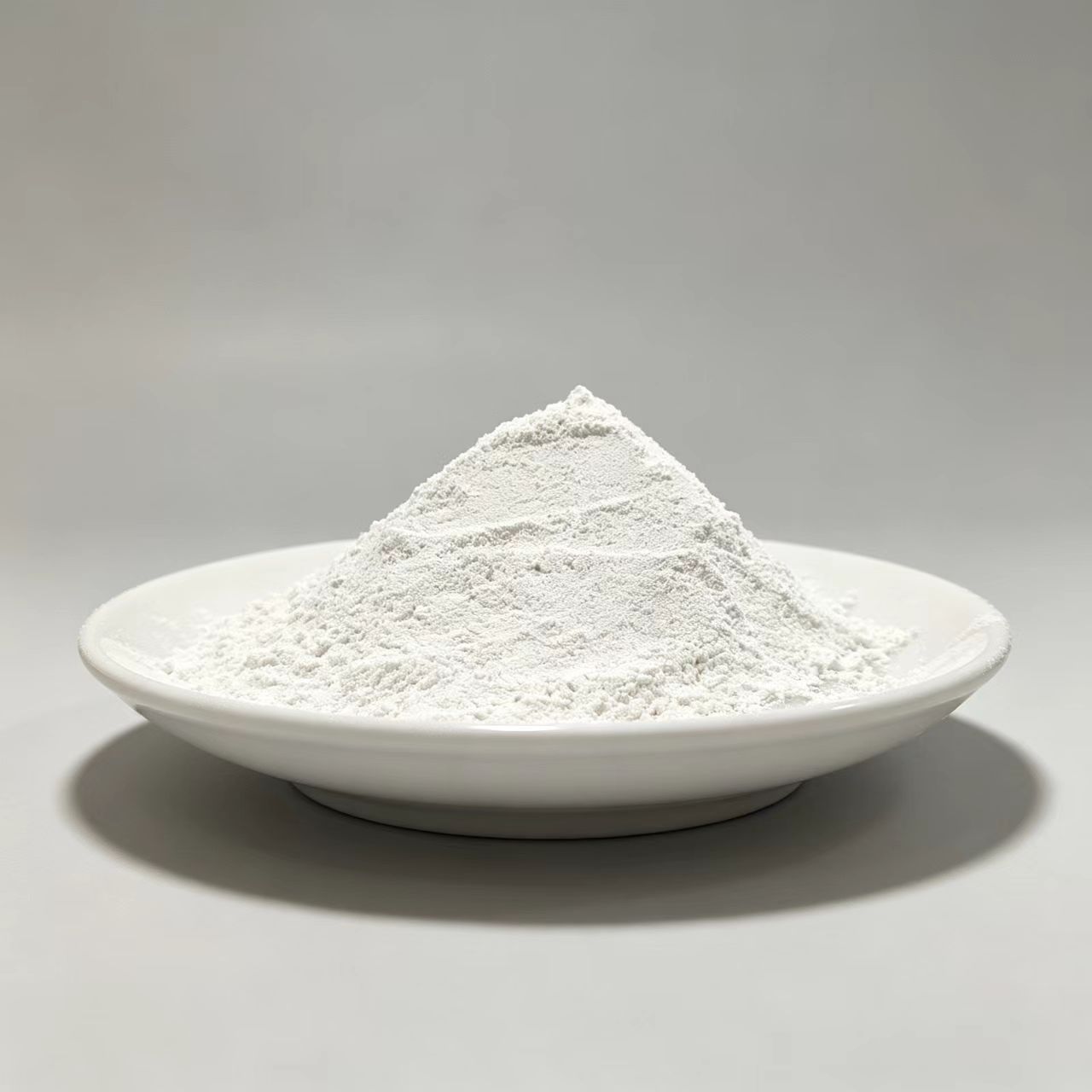
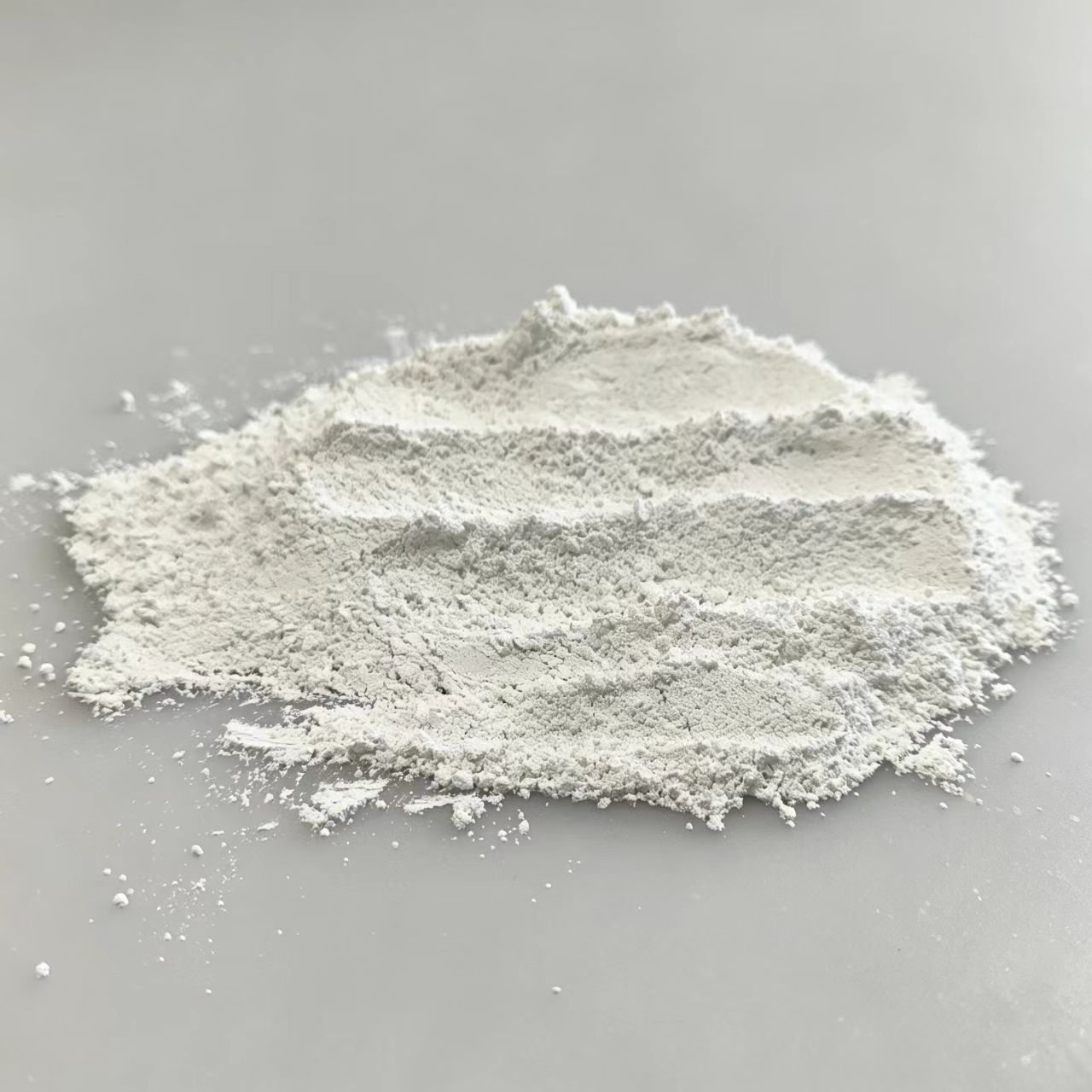
Zirconia silica fume - also written ZrSF, Zr-SF, zirconia microsilica or zircon fume - is a white, amorphous powder captured from the fused-zirconia furnace, where zircon sand is desilicated above 2 000 °C. That origin puts two oxides in the same particle: ≥ 92% SiO₂ with ≥ 2.5% ZrO₂, at a loose bulk density of 300-380 kg/m3 and a service temperature of ≤ 1 650 °C. Built for refractory castables, ladle and tundish linings, gunning mixes and ceramic glazes.

Sichuan Ewende New Material Co., Ltd.
Undensified · Densified · ZrSF · Made in ChinaWhat it does in a refractory mix
Six reasons castable plants specify zirconia silica fume - from where the powder comes from to how the ZrO₂ behaves at the hot face.
Two oxides, one particle
Not a blend. During fusion the departing SiO vapour carries ZrO₂ with it, so every particle holds both phases: 92-95% SiO₂ and 2.5-4% ZrO₂, with iron under 0.2%.
Refractory to 1 650 °C
Amorphous silica with a refractoriness above 1 700 °C and a working service temperature of 1 650 °C - enough for ladle, tundish and kiln-furniture duty.
Low water demand, high flow
Spherical sub-micron particles and a D50 of 0.5-0.8 μm lubricate the mix: less water for the same flow, which means lower porosity after dry-out.
Slag and thermal-shock resistance
The carried ZrO₂ shifts slag wettability at the hot face and toughens the matrix through transformation toughening - fewer cracks after repeated heat cycles.
Densifies the castable matrix
Fills the gaps between cement, fines and aggregate, and reacts with free lime to build secondary mullite - higher hot strength and a tighter, less permeable body.
A by-product, not a mined ore
Captured from the fused-zirconia furnace instead of landfilled: the same furnace off-gas becomes a saleable white powder, with no extra mining or firing step.
Zirconia Silica Fume parameters
Silica-fume characteristics are controlled to ASTM C1240 through the whole production run. No silica-fume standard sets a ZrO₂ limit, so we report ZrO₂ on every COA alongside them.
| SiO₂ content | ≥ 92%Grade minimum · typical 93-95% · ASTM C1240 / EN 13263 require ≥ 85% |
|---|---|
| ZrO₂ content | ≥ 2.5%Typical 3.0-4.0% · carried over from the zircon sand, not blended in |
| Form | UndensifiedAmorphous sub-micron powder · densified grades on request |
| Bulk density | 300-380 kg/m3As-produced loose band · densified 550-650 kg/m3 |
| Specific gravity | 2.2 - 2.4 g/cm3Insoluble in water |
| pH value | 3 - 6Mildly acidic from the zirconia route · check dispersant demand |
| Colour | WhiteWhiteness index ≥ 90 (blue light) · very low iron and carbon |
| Mean particle size | 0.5 - 0.8 μmD50 · coarser than silicon-metal fume, packs better in castables |
| Specific surface area | 12 000 - 20 000 m2/kgBET · equivalent to 12-20 m2/g |
| Loss on ignition | ≤ 2.0%Typical ≤ 1.0% · ASTM C1240 limit ≤ 6% |
| Moisture content | ≤ 0.5%As packed · ASTM C1240 limit ≤ 3% |
| 45 μm sieve residue | ≤ 1.0%Typical ≤ 0.5% · ASTM C1240 limit ≤ 10% |
| Refractoriness | ≥ 1 700 °CService temperature ≤ 1 650 °C |
| Pozzolanic activity index, 7 d | ≥ 105%ASTM C1240 requirement |
| Fe₂O₃ | ≤ 0.2%Low iron keeps the powder white and avoids fluxing the matrix |
| Al₂O₃ | ≤ 0.3%Typical 0.1-0.2% |
| CaO + MgO | ≤ 0.3%Typical ≤ 0.1% |
| Alkali (Na₂O + K₂O) | ≤ 0.3%GB/T 27690 limit ≤ 1.5% |
| Chloride (Cl⁻) | ≤ 0.05%GB/T 18736 / 27690 limit ≤ 0.1% |
| Sulphate (SO₃) | ≤ 0.5%EN 13263 limit < 2% |
| Standards compliance | ASTM C1240 · EN 13263 · GB/T 18736 · GB/T 27690COA |
| Also tested to | GB/T 21114 (XRF) · GB/T 1596 · GB/T 176 · TB 10424Routine batch testing per COA |
View the full comparison - silica-fume limits under 9 national standards
| Parameter | EuropeEN 13263 | NorwayNS 3045 | FranceNF P18-502 | AustraliaAS 3586 | United StatesASTM C1240 | CanadaCSA A23.5 | JapanJIS A6207 | ChinaGB/T 18736 | ChinaGB/T 27690 |
|---|---|---|---|---|---|---|---|---|---|
| SiO₂ (%) ≥ | 85 | 85 | 85 | 85 | 85 | 85 | 85 | 85 | 85 |
| SO₃ (%) < | 2 | - | 2.5 | 3 | - | 1 | 3 | - | - |
| Cl⁻ (%) < | 0.3 | Report | 0.2 | Report | - | - | 0.1 | 0.1 | 0.1 |
| CaO (%) < | 1 | 2 | - | - | - | - | 1 | - | - |
| MgO (%) < | - | - | - | - | - | - | 5 | - | - |
| Si (%) < | 0.4 | - | - | - | - | - | 0.4 | - | - |
| Na₂O + K₂O (%) < | - | - | 4 | - | - | - | - | - | 1.5 |
| C (%) < | - | - | 4 | - | - | - | - | - | - |
| Moisture content (%) < | - | - | - | 2 | 3 | - | 3 | 3 | 3 |
| Loss on ignition (%) < | 4 | 5 | - | 6 | 6 | 6 | 5 | 6 | 4 |
| Specific surface area (m2/g) | 15-35 | ≥12 | 20-35 | - | - | - | ≥15 | ≥15 | ≥15 |
| 45 μm sieve residue (%) < | - | - | - | - | 10 | 10 | - | 5 | - |
| Bulk density (kg/m3) | - | - | - | Report | Report | - | - | - | - |
| Specific gravity (g/cm3) | - | - | 2.1-2.3 | - | - | - | Report | - | - |
| Water demand ratio (%) ≤ | - | - | - | - | - | - | - | 125 | 125 |
| Pozzolanic activity index, 3 d (%) ≥ | - | - | - | - | - | - | - | - | - |
| Pozzolanic activity index, 7 d (%) ≥ | - | - | - | Report | 105 | 85 | 85 | 95 | 105 |
| Pozzolanic activity index, 28 d (%) ≥ | 100 | 95 | - | - | - | - | 100 | 115 | - |
| Water / binder ratio | 0.5 | 0.5 | - | - | 0.484 | - | 0.5 | 0.5 | 0.5 |
| Curing regime | Standard | Standard | - | - | Accelerated | Accelerated | Standard | Standard | Accelerated |
Limits shown are the specification requirements of each national standard, for reference only. Actual values for each shipment are reported on the Certificate of Analysis. None of them limits ZrO₂ - that figure sits on our own COA, at 2.5-4.0%.
How to dose it on site
Five practical notes that decide whether zirconia silica fume performs - dosage band, dispersant pairing, addition point and dry-out.
-
1
In low-cement refractory castables the usual addition is 3%-8% of the binder, where it works as binder, active agent and mineraliser at once. In UHPC and high-performance concrete it runs 5%-10% of the cementitious material.
-
2
Silicon-metal fume sits at pH 5-8.5; ZrSF sits at 3-6. The acidic surface pulls more dispersant, so run a trial with your own polycarboxylate or naphthalene system before scaling up - usually a small uptick in dispersant, sometimes a set retarder.
-
3
Add it to the dry blend with cement, fines and micro-fillers, not to a wetted mix. Pre-blending is what keeps 0.5-0.8 μm particles from forming lumps that never disperse.
-
4
Extend mixing by about 30 seconds over a plain castable. Undensified ZrSF wets out fast, but the mix still needs shear time to break the last agglomerates.
-
5
Keep the dry-out curve unchanged: free water leaves below 600 °C and the ZrO₂ does not alter it. Skip the low-temperature hold and steam spalling follows - that is the failure most often blamed on the fume.
Where zirconia silica fume is used
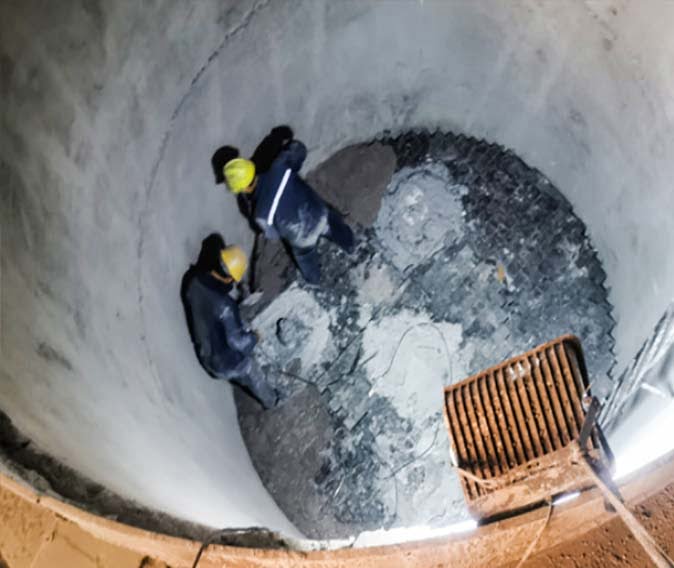
Castables, ladle linings and gunning mixes take most of the volume; glazes and UHPC take the rest - one white powder, two oxides, very different jobs.



Packaging

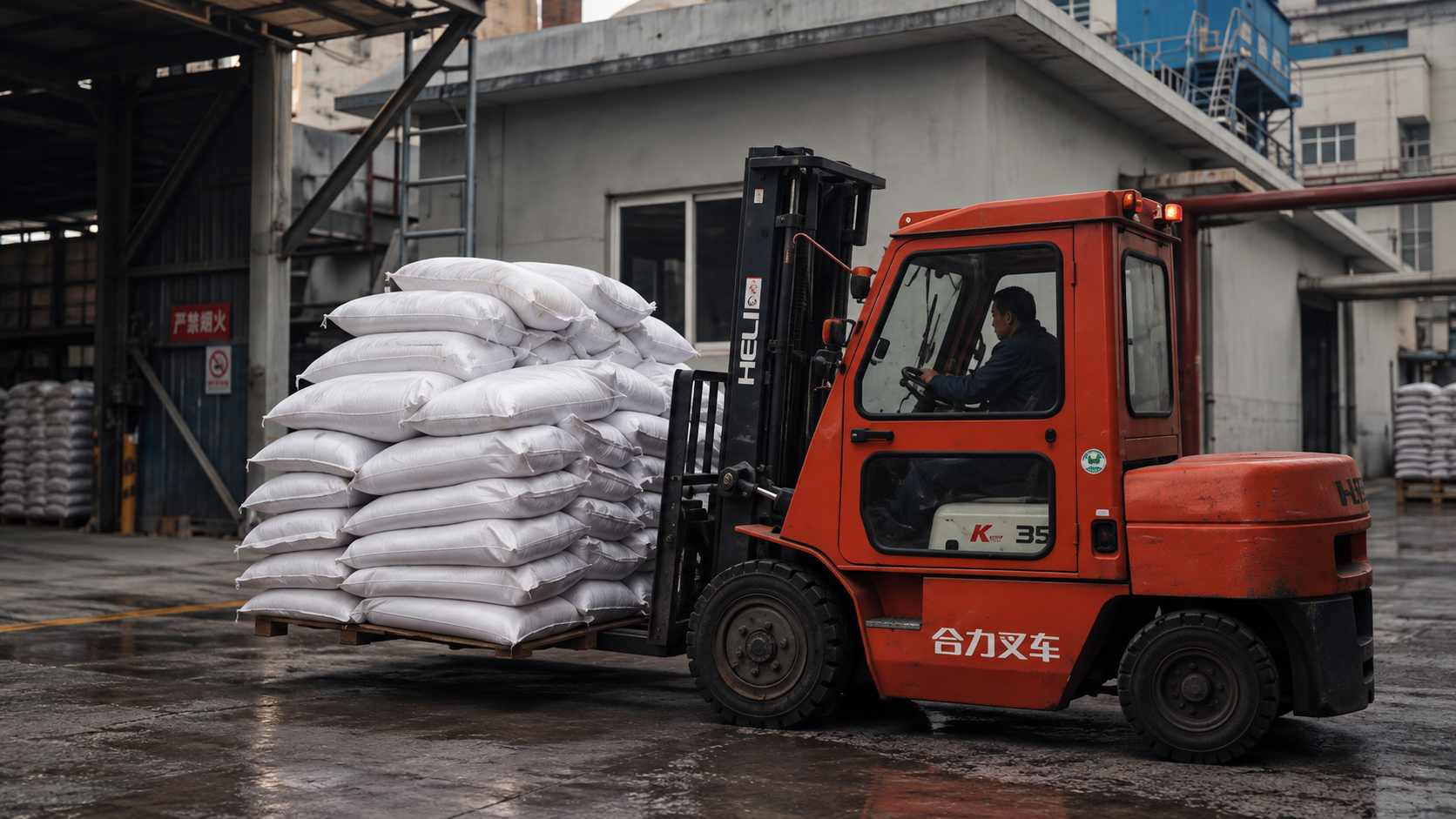
Palletized Small Bags
25kg plastic woven bags with an inner PE liner, 42 per pallet - forklift-friendly and fast to load into containers.
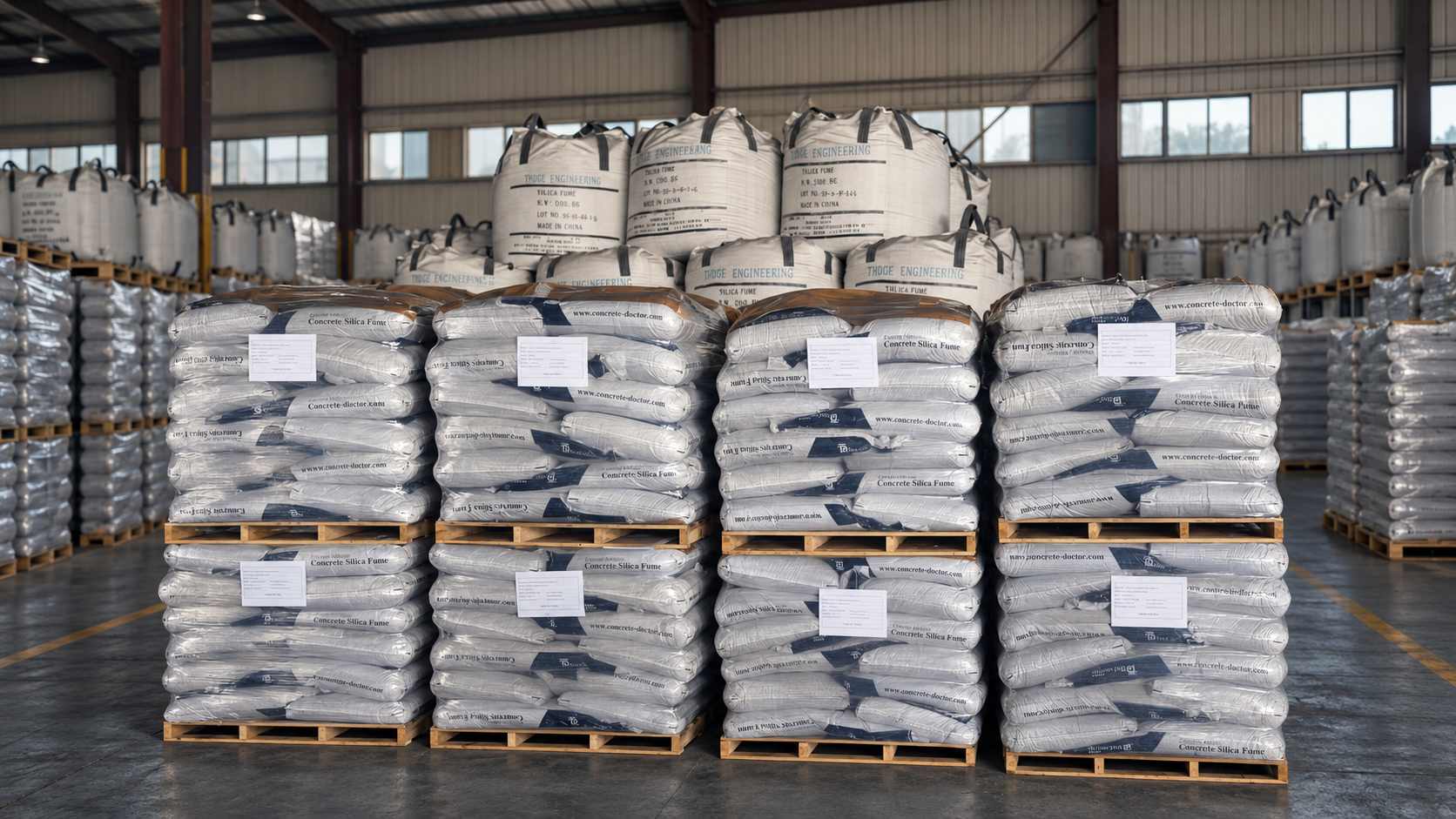
Palletized & Stretch-Wrapped
Pallets secured with stretch film for safe loading, unloading and long-distance ocean shipping.
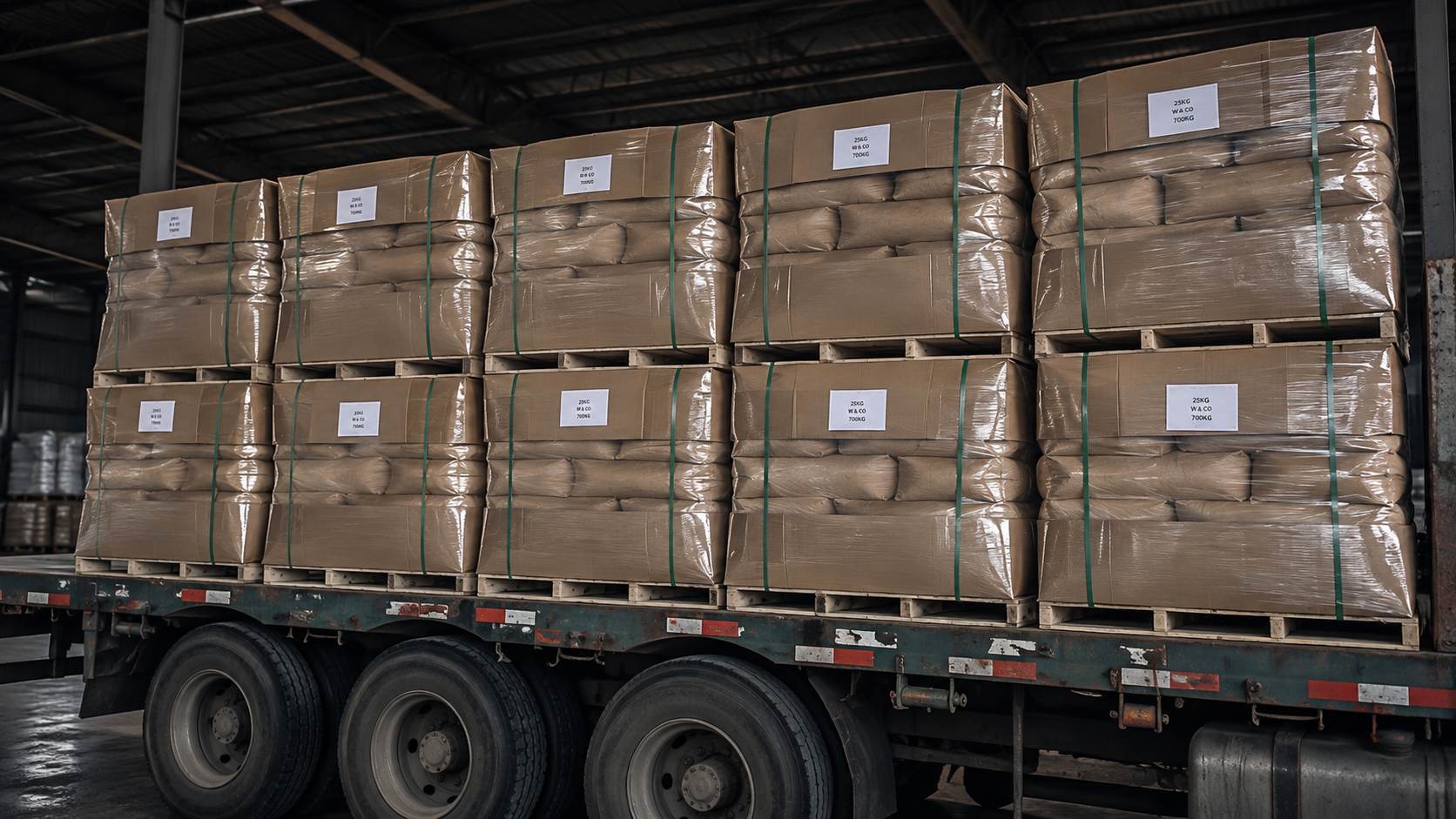
Kraft Paper Bags
25kg moisture-proof kraft paper bags with inner PE liner - easy to carry, ideal for construction sites.
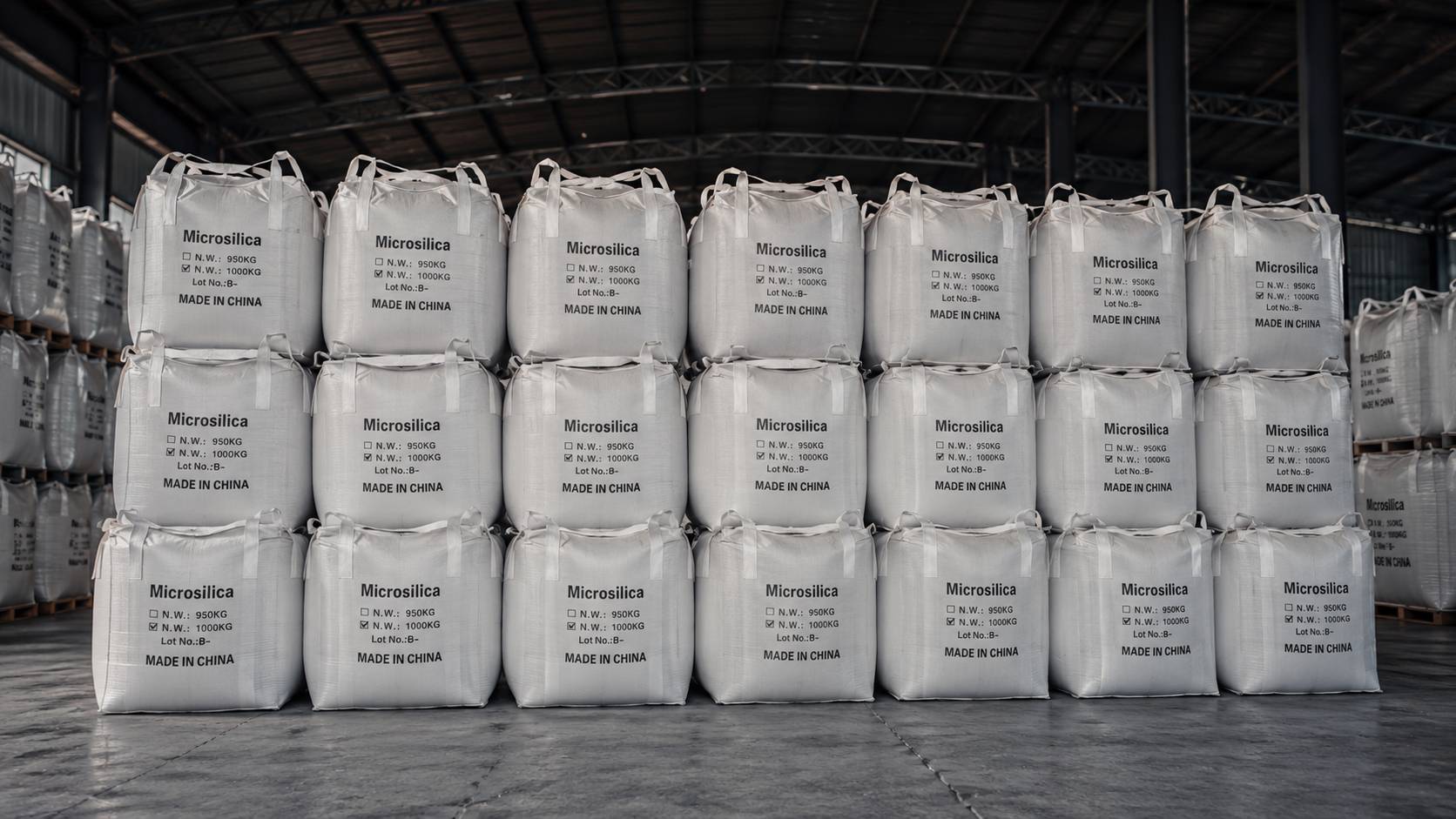
Jumbo Bags (FIBC)
500-1000kg plastic woven bags, 2 per pallet, with or without bottom discharge spout - built for bulk handling.
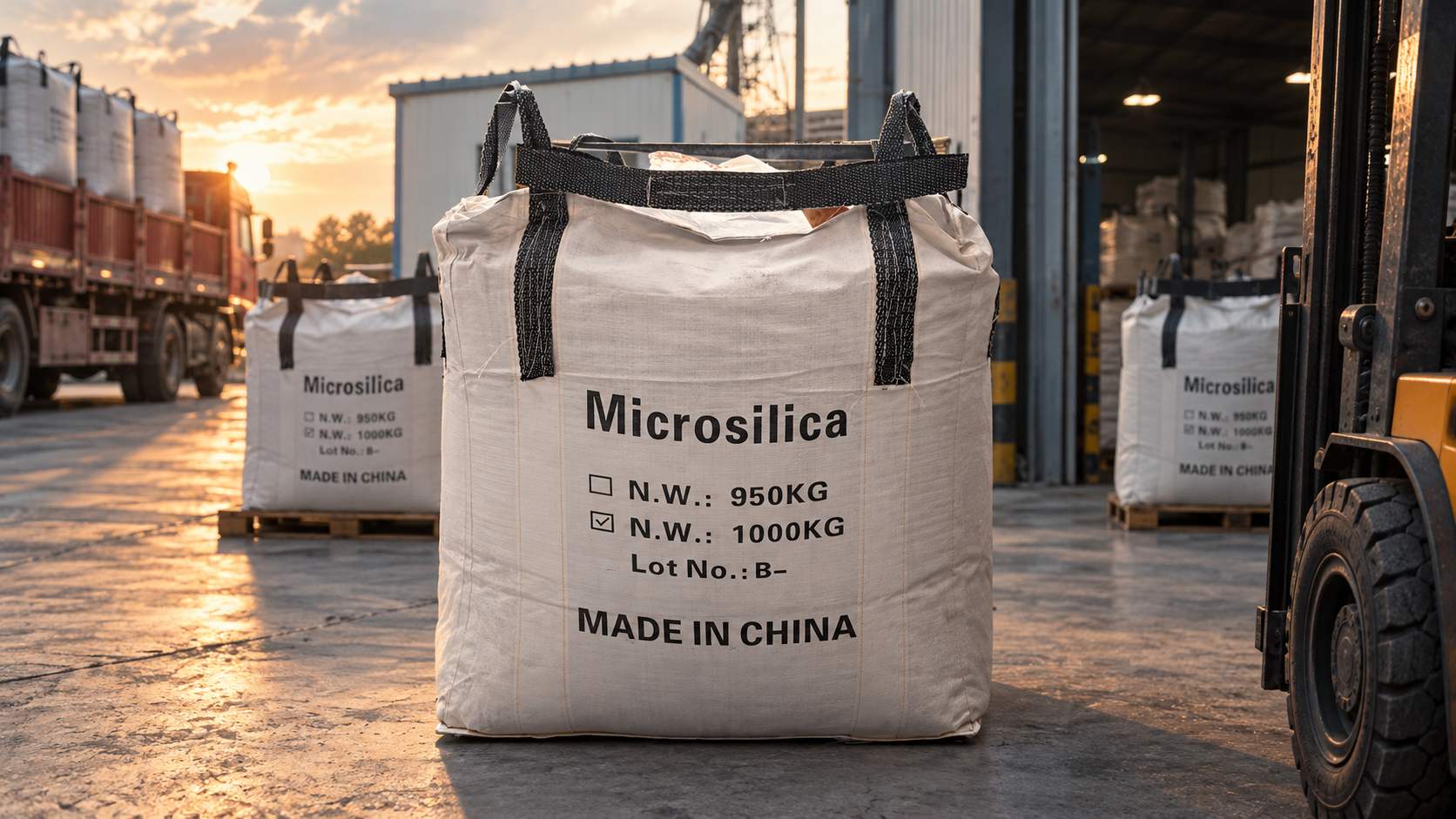
Custom Logo Packaging
Your own logo, bag design and marking - professional OEM service to build your brand worldwide.
Contact Us
GET A QUOTECall Us
+86 13109355617Email Address
ewende@microsilica-si.comFAQ about zirconia silica fume
Ewende's mission is to provide professional services, high quality products and strict after-sales control - and to actively solve customer problems for mutual benefit.
What is zirconia silica fume and where does it come from?
Zirconia silica fume is captured from the fused-zirconia furnace. Zircon sand is melted and desilicated at above 2 000 C; the SiO vapour leaving the furnace oxidises back to amorphous SiO2 spheres and, as it cools, carries 2.5-4% ZrO2 with it. The result is a white powder holding two oxides in the same particle - not a blend of silica fume and zirconia.
How is ZrSF different from ordinary silica fume?
Three things. It is whiter, because the zirconia route leaves very little iron and carbon. It is coarser - D50 0.5-0.8 um against 0.15-0.20 um for silicon-metal fume - so it packs differently in a castable. And it is acidic, pH 3-6 instead of 5-8.5. Chemically it runs 92-95% SiO2 with 2.5-4% ZrO2, against 85-96% SiO2 and essentially no ZrO2.
How much ZrO2 does ZrSF actually add to my castable?
At a typical 5% addition, the 3-4% ZrO2 in the fume puts roughly 0.15-0.2% ZrO2 into the castable. That is enough to shift slag wettability and seed zircon formation at the hot face, but it is not a substitute for zircon flour or fused zirconia where a zone needs 5% ZrO2 or more. Think of ZrSF as a clean white fume that also carries zirconia - not as a zirconia additive.
The pH is acidic - will that upset my mix?
Silicon-metal fume sits at pH 5-8.5; ZrSF sits at 3-6 because of the zirconia process. In a low-cement castable the acidic surface changes how much dispersant the mix pulls, so run a trial with your own polycarboxylate or naphthalene system before scaling up - usually it means a small uptick in dispersant, sometimes a set retarder. Store bags dry and sealed.
Undensified or densified - what is the difference?
Undensified ZrSF leaves the furnace at 300-380 kg/m3 and wets out fastest, which is what castable plants want. Densified material at roughly 550-650 kg/m3 is available on request when you need to cut freight volume or your mixer handles compacted lumps well.
What is the MOQ, packing and lead time?
10 tonnes minimum, 25 kg bags on pallets or 500 / 600 / 1 000 kg jumbo bags, neutral packing or your own logo. Around 15 days after order confirmation or deposit. Samples of 1-2 kg are free; courier is quoted separately.