


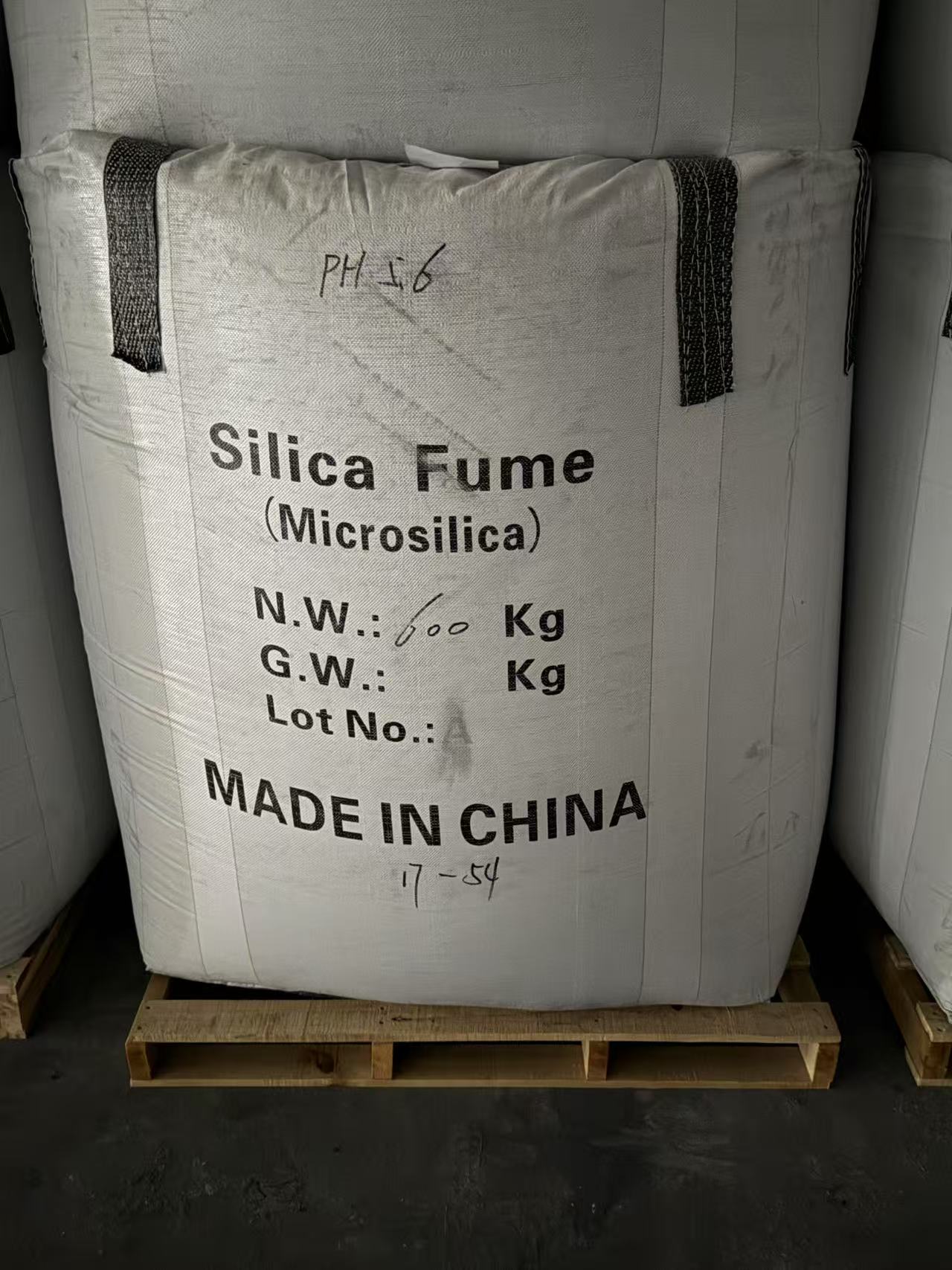
In modern high-strength concrete engineering systems, silica fume has long ceased to be a mere supplementary admixture; rather, it has become a core component that bridges the gap between microstructural optimization and a leap in macroscopic performance. Particularly in high-strength concrete applications of C50 grade and above, the judicious incorporation of densified silica fume can simultaneously achieve two key objectives: regulating concrete water retention and enhancing density, thereby providing a solid foundation for the long-term durability of engineering structures.
From the perspective of physical filling mechanisms, the average particle size of silica fume is only one-hundredth that of cement particles. This ultrafine particle characteristic allows it to precisely embed itself into the micron-scale voids of the cement hydration system, acting like fine aggregate to sever and seal originally interconnected capillary channels, thereby significantly reducing the proportion of harmful voids within the concrete. Test data show that when 5% of densifying silica fume is added to C60 high-strength concrete, the proportion of harmful pores larger than 200 nanometers within the concrete decreases from 32% to 11%, and the overall density increases by 27%. At 60 days of age, the water penetration depth is only 4.7 millimeters, representing a nearly 50% improvement in water resistance compared to the blank control group. This densified microstructure fundamentally blocks the pathways for external moisture and harmful ions to penetrate, while also altering the distribution of moisture within the concrete.
In terms of water retention regulation, the high specific surface area of silica fume allows for the formation of a large amount of stable adsorbed water on the particle surfaces. This water does not rapidly bleed out during the early construction stages but instead forms a sustained “internal curing water source” within the concrete. Unlike traditional curing methods that rely on external watering, the water retained by the silica fume is slowly released during the middle and late stages of cement hydration, continuously supplying water for the hydration reaction and preventing self-drying shrinkage and cracking in high-strength concrete caused by an excessively low water-to-binder ratio. Actual engineering monitoring data shows that high-strength concrete blended with 5% silica fume exhibits an 18% increase in effective internal water retention and a 22% reduction in self-shrinkage at 90 days of age, effectively resolving the industry-wide challenge of cracking in high-strength concrete.
In practical engineering applications, the synergistic effect of silica fume with high-strength concrete requires corresponding mix design optimization to unlock its maximum value. By simultaneously increasing the sand content by 5%–8% and blending appropriate amounts of S95-grade mineral powder and fly ash, it is possible to offset the increase in early-stage viscosity caused by silica fume while further amplifying the cumulative effect of the pozzolanic reaction: Silica fume reacts first with the calcium hydroxide produced by cement hydration in the early stages, generating a denser calcium silicate hydrate gel. Subsequently, the active components of fly ash continue to participate in secondary hydration, resulting in a 90-day compressive strength that is more than 10% higher than that of the control group.
Currently, this advanced application technology has been widely implemented in demanding engineering scenarios such as underwater piers for cross-river bridges, core walls of super-high-rise buildings, and nuclear power plant shielding structures. While reducing cement usage by 10%, it simultaneously achieves a threefold improvement in the density, water retention, and long-term durability of high-strength concrete, providing a highly cost-effective technical pathway for the development of green, long-life high-performance concrete.