


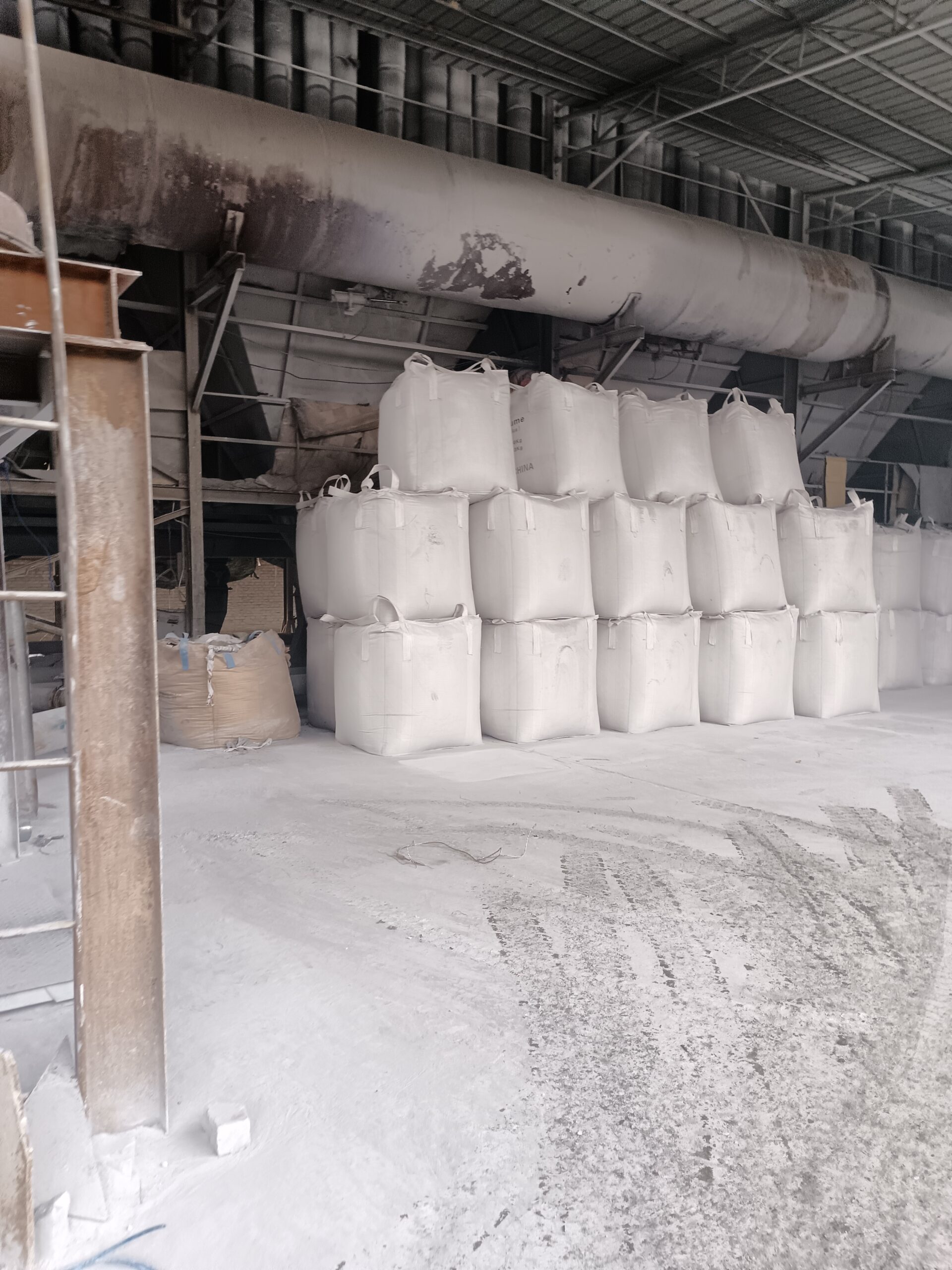
In downstream applications such as high-performance concrete and specialty mortars, the activity of silica fume directly determines the efficiency of its pozzolanic reaction, ultimately affecting the strength, density, and durability of building materials. The problem frequently encountered in many engineering applications—where “the addition of silica fume fails to achieve the expected strengthening effect”—is essentially related to limitations in the manifestation of silica fume activity. The reactivity of silica fume is not a single, fixed value but is jointly determined by inherent production attributes, post-production usage conditions, and adverse interfering factors. We can systematically break down the core logic influencing it across three dimensions.
I. Inherent Properties: The Foundational Basis for Silica fume Reactivity
These factors are directly determined by the raw materials used in smelting and the production process. They constitute the “activity genes” inherent in silica fume from the moment of its creation and serve as the core underlying indicators for assessing product quality.
First is the purity and content of silicon dioxide (SiO₂). The core active component in silica fume is amorphous SiO₂, and industry standards typically require its proportion to be no less than 85%; high-quality silica fume intended for high-end engineering applications must have a SiO₂ content of 90% or higher. Impurities introduced by raw materials—such as alkali metal oxides and unburned residual carbon—directly reduce the proportion of active components. They also interfere with the secondary hydration reaction between SiO₂ and Ca(OH)₂ generated during cement hydration, significantly reducing the efficiency of the pozzolanic reaction.
Particle fineness and morphology also play a critical role: the median particle size of silica fume is only 0.1–0.3 micrometers, which is two orders of magnitude finer than ordinary cement particles. The smooth, spherical particles naturally formed during the high-temperature chemical vapor deposition process not only provide a vast reaction surface area but also exert a “ball-bearing effect” in the slurry to optimize rheological properties. The corresponding specific surface area directly reflects the reaction contact capacity. Qualified silica fume generally achieves a specific surface area of 15,000–30,000 m²/kg, far exceeding that of conventional mineral admixtures, providing an ample interfacial foundation for rapid hydration reactions.
II. External Application Conditions: Key Variables Determining Whether Activity Can Be Fully Released
Even highly active silica fume that inherently meets quality standards will see its actual effective activity significantly reduced if subsequent processing and usage stages are not properly controlled.
The primary issue is the agglomeration effect of ultrafine particles: silica fume particles are extremely fine and have extremely high surface energy, causing them to adsorb onto one another via van der Waals forces and form numerous loose agglomerates. These agglomerates effectively encapsulate the silica fume particles inside, preventing them from coming into full contact with the cement paste. Therefore, breaking up these agglomerates through mixing and the addition of water-reducing agents is a necessary prerequisite for fully unleashing the activity of silica fume.
At the same time, alkalinity, mixing, and dispersion processes are also crucial: The activation of silica fume depends on a highly alkaline environment. After normal cement hydration, the pH of the pore fluid in the paste reaches 12–13. This alkaline environment dissolves the inert oxide layer on the surface of the silica fume. Adequate mechanical mixing, combined with high-efficiency water-reducing agents, can thoroughly break up the silica fume agglomerates, ensuring that every ultrafine particle is uniformly dispersed within the cement matrix and allowing all active components to participate in the hydration reaction.
III. Negative Interfering Factors: Hidden Pitfalls That Permanently or Irreversibly Reduce Activity
During production, storage, and transportation, several common improper practices can directly destroy the activity of silica fume, causing an irreversible decline in product quality.
First is excessive residual carbon content. Coke particles that were not fully combusted during the smelting process become mixed into the silica fume powder. These carbon particles possess no reactivity themselves and adsorb large amounts of air-entraining agents and water-reducing agents from the slurry. This not only interferes with the bonding between the silica fume powder and the cement matrix but also directly compromises the slurry’s workability.
Second is the partial crystallization of the amorphous structure. If silica fume is exposed to high temperatures for extended periods during collection and storage, the originally amorphous SiO₂ will gradually transform into stable crystalline forms such as quartz. This process is irreversible and directly results in the permanent loss of the silica fume’s reactivity.
Third is moisture absorption resulting from improper storage. When silica fume absorbs moisture, premature hydration reactions occur on the particle surfaces, forming a layer of inert hydrated gel. During subsequent use, this significantly delays or even completely blocks the pozzolanic reaction, resulting in a substantial decline in thesilica fume’s effective activity.
For both building materials manufacturers and engineering applications, fully leveraging the active benefits of silica fume requires not only strict control over core intrinsic indicators—such as SiO₂ content and amorphous fraction—during procurement, but also rigorous process control over dispersion and curing during application. Additionally, it is essential to avoid various adverse factors during storage and transportation to ensure that the high reactivity of silica fume is truly converted into high strength and durability in concrete.